
A center diamond draws the first glance, but it does not decide the character of an engagement ring by itself. The setting, the line of the band and the relationship between neighboring stones change how the complete piece reads. When choosing a lab-grown diamond engagement ring, compare those relationships before ranking every design by a single measurement.
Start with the outline
A solitaire makes one center stone and its band the visual focus. Its apparent simplicity brings the shape, setting and shoulder line into sharper view. An Asscher-cut center reads as a different geometry from an oval or marquise; the outline changes the composition before any other detail is considered. There is no universally superior silhouette. The useful question is which one holds your attention when you look at the entire ring, not just a close-up of its diamond.
Notice what happens beside the center
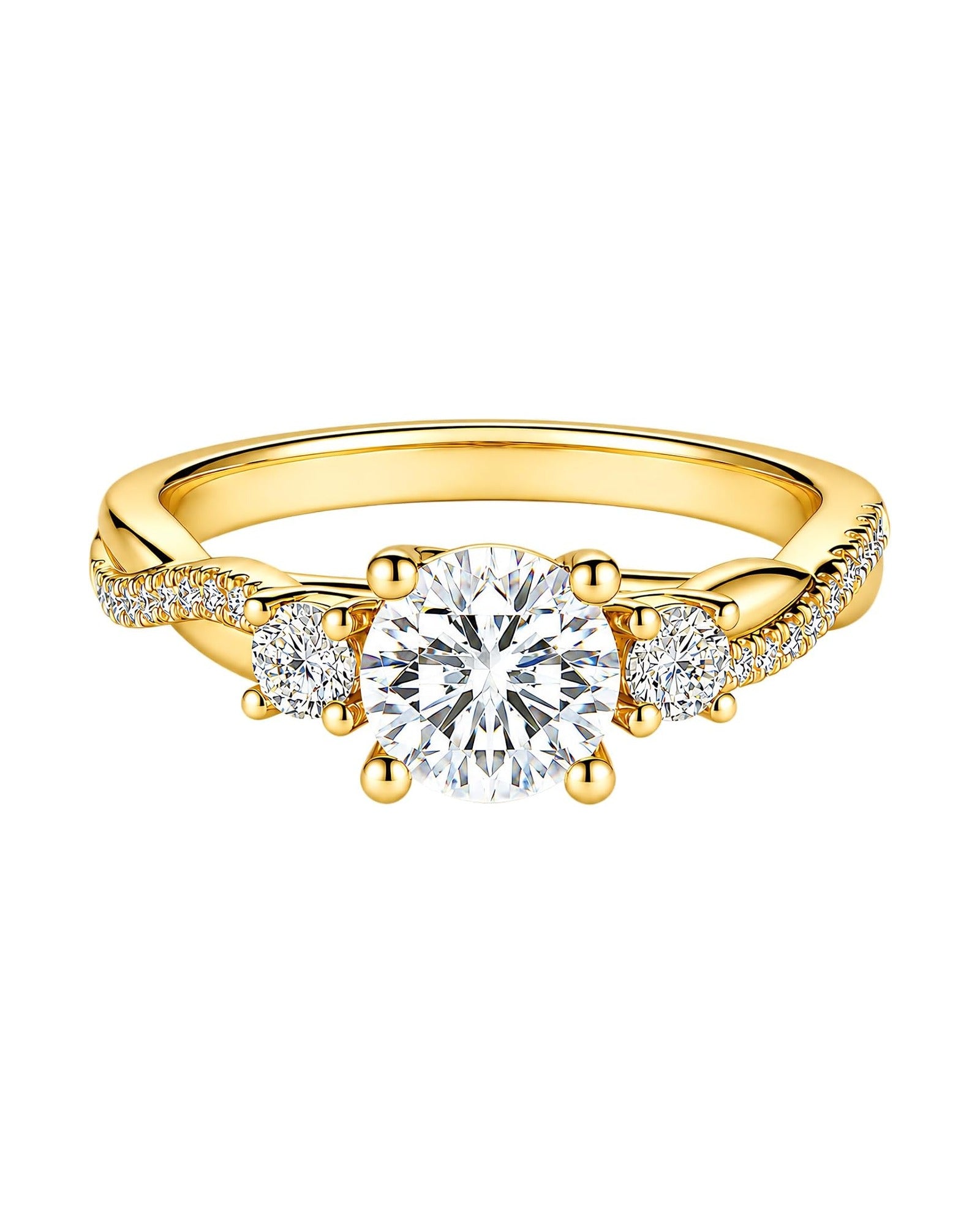
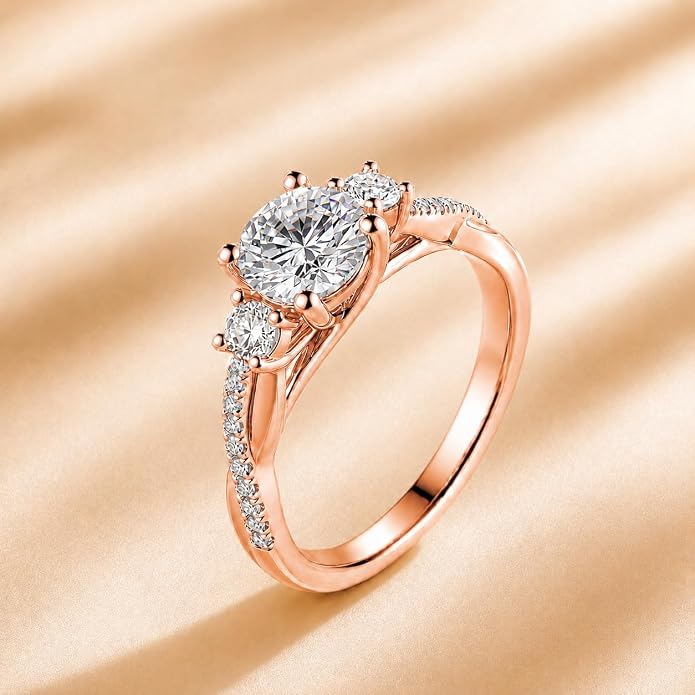
Side stones can lead the eye inward along the shoulders. A pavé side-stone design uses smaller stones as part of the band line; a halo places stones around the center. These are different visual structures, not interchangeable names for extra sparkle. A three-stone composition gives the neighboring stones a more independent role. In the Three-Stone Twist, three prominent stones meet a flowing, twisted band. Look at both the front and angled views to understand that movement.
Then look at the band without the center stone in mind. Does its line feel straight, sculpted or gently turning? Does the setting create a clear boundary around the center, as a bezel does, or leave more of its outline open? These differences affect the visual impression. They do not, on their own, guarantee a fit beside a wedding band or make claims about durability; exact dimensions and the two specific pieces matter.
Compare real configurations
Product photographs are a starting point, but the options on each product page determine what you can actually select. Review the available gold fineness, metal color, stone weight and US ring size for that specific design. A style may offer some of these choices and not others; do not assume every ring shares the same option structure. When a selection changes, check the displayed price and the details for that variant. If a stone specification is not shown for a configuration, ask rather than borrowing one from another option.
Some people prefer a single focal point; others are drawn to rhythm across several stones or to the detail of a stone-set shoulder. These are preferences about composition, not rules about what an engagement ring should signify. Compare a small set of actual designs from more than one angle, then return to the one whose complete form feels right.
Browse the lab-grown diamond engagement rings collection. If you are weighing two settings or wondering about a pairing, contact us with the specific design links so the conversation stays grounded in the pieces you are considering.